
TITAN beyond LIMS for Engineering Test Labs
Every LIMS capability your lab expects, connected to the test planning, scheduling and traceability layer a traditional LIMS was never built to provide.
Trusted by R&D labs around the world








MORE THAN A LIMS. ONE PLATFORM FOR THE FULL TEST LIFECYCLE.
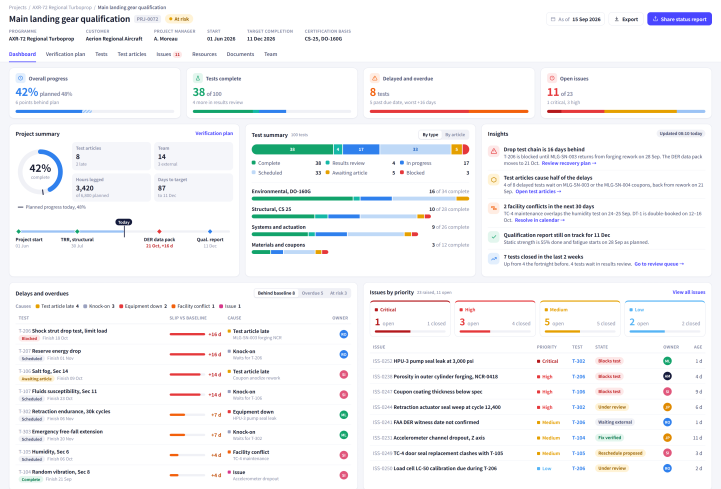
Your lab needs sample tracking, audit trails and reports. It also needs those reports tied back to the validation of the requirements that triggered the test, the schedule that governs it and the program milestone it feeds into.
A traditional LIMS handles the first part.
TITAN handles all of it.
| CAPABILITIES | Traditional LIMS |  |
|---|---|---|
| Sample and result tracking | Yes | Yes |
| Audit trail on lab records | Yes | Yes across the full test lifecycle |
| Equipment and calibration tracking | Yes | Yes across the full test lifecycle |
| Report generation | Yes | Yes |
| Test planning and DVP management | No | Yes |
| Resource and facility scheduling | No | Yes |
| Program milestone visibility | No | Yes |
| Test article and prototype tracking | No | Yes |
| Booking portal for external customers | No | Yes |
TITAN FOR YOUR INDUSTRY

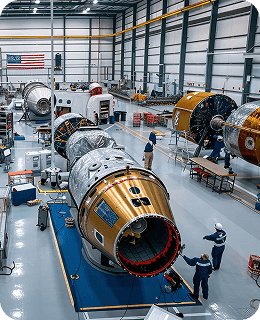
Aerospace LIMS
Qualification testing traceability against program and standards-driven requirements.

Automotive LIMS
DVP&R-driven testing, test plan traceability across labs and proving grounds.


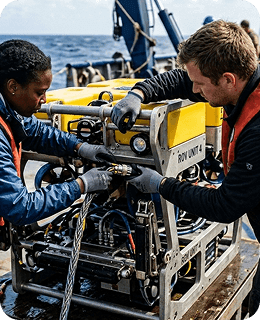
Marine LIMS
Classification society compliance, environmental endurance testing and type approval evidence across propulsion, structural and safety systems

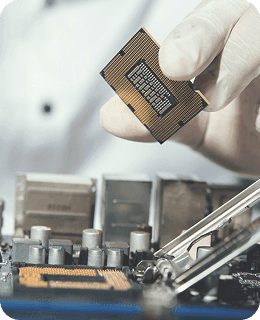
Tier 1 & Component Manufacturers LIMS
Customer specification management, qualification evidence and full traceability back to the part number.
STOP RUNNING TWO SYSTEMS TO MANAGE ONE PROCESS
Every lab that pairs a LIMS with a spreadsheet for planning, a shared calendar for scheduling and a manual reconciliation step before every audit is paying for that fragmentation in hours, handoffs and risk.
TITAN consolidates the entire chain into one platform. One place to plan, schedule, execute, capture results and report. One audit trail. One source of truth for test managers, lab teams and program leads.
If your lab has outgrown what a traditional LIMS can offer, it has not outgrown what TITAN was built for.
Request DemoFrequently Asked Questions
A Laboratory Information Management System is software that manages laboratory data and workflow. It tracks samples, assigns tests, captures results, enforces specification limits, holds the audit trail and generates reports and certificates.
Yes. TITAN delivers every core LIMS function including test article tracking, test method catalogues, results capture, equipment and calibration records, inventory, audit trails and reporting. It also covers scheduling, verification planning and work orders, which sit outside a traditional LIMS.
A LIMS is sample-centric. It manages what happens to a sample inside the lab. Test Lifecycle Management is programme-centric. It manages the project insights, the verification plan, the test article, the schedule, the resources, the execution, the results and the report as one connected thread.
In most physical testing environments, yes. Labs running heavy analytical chemistry alongside physical testing sometimes keep a specialist analytical LIMS and integrate it with TITAN through the REST API.
Several generic LIMS vendors offer an automotive configuration. The difference is architectural. A configured chemistry LIMS still treats the vehicle as a sample. TITAN was built from the start around test articles, rigs, verification plans and lab scheduling, which is how automotive and aerospace labs work.
Yes. The test article model covers everything from a material coupon to a full vehicle, including source material, lot tracking and specimens cut from a larger piece of stock.
TITAN integrates through a REST API, direct database connections and prebuilt integrations, and stores test data in any format your methods produce, including channels, curves and files.
Yes. TITAN runs in the cloud or inside your own network, which matters for labs with export control, customer confidentiality or data residency obligations.
Automotive OEMs and suppliers, aerospace, battery and electric vehicle testing, marine, railway, consumer electronics and independent TIC laboratories.